

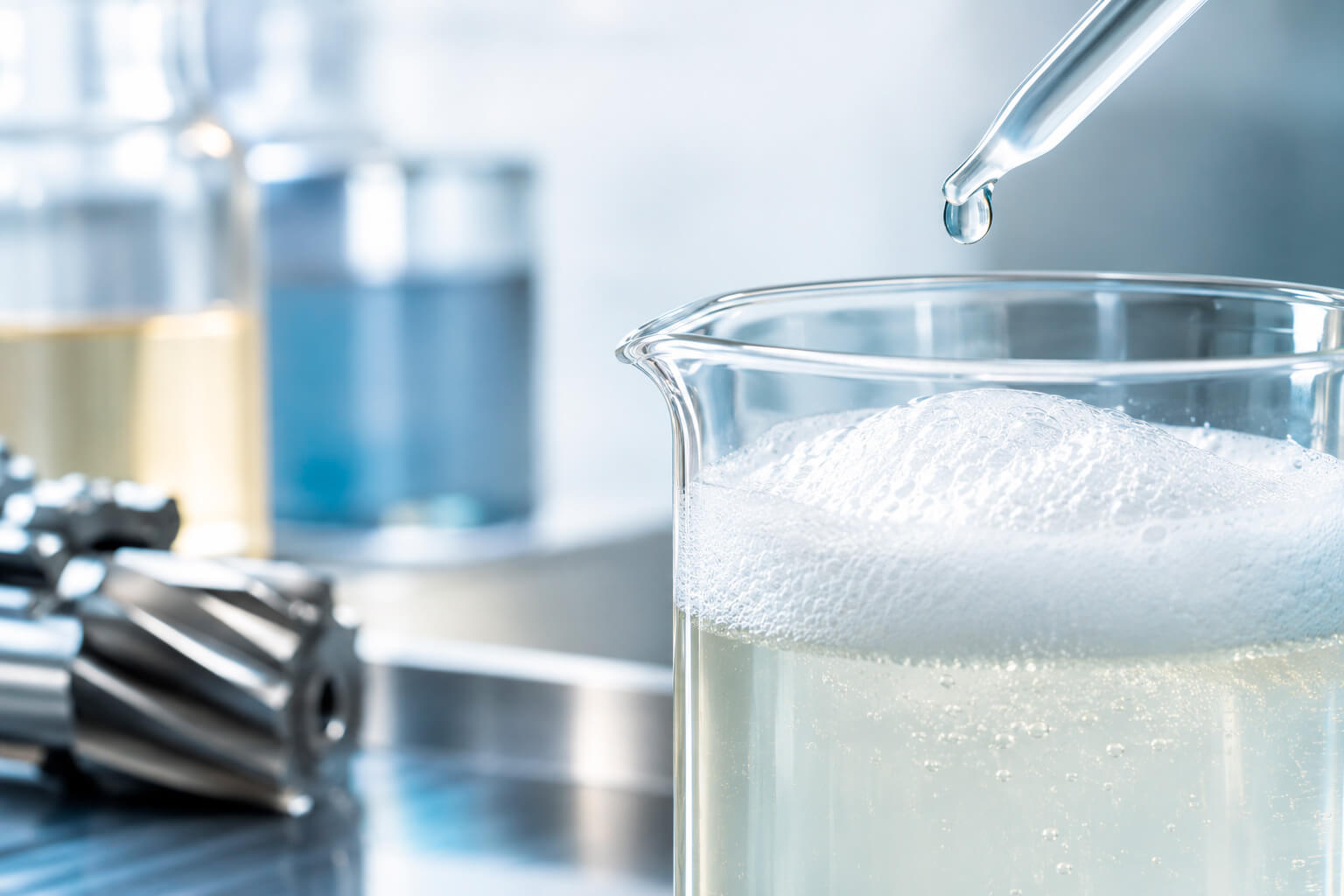
What Are Antifoams?
- Surface coating defects
- Filling obstructions
- Reduced equipment performance
Antifoams for Lubricants
- Prevention of bubble formation that can interfere with lubricant flow.
- Improved lubricant stability under high-temperature and high-agitation conditions.
- Help maintain oil quality throughout its service life, extending its lifespan and optimising performance.
Properties of Antifoams
- Insolubility in the foaming medium: This property ensures that they remain on the liquid surface, where they can act effectively.
- Low viscosity: Allows rapid spreading across foamy surfaces, promoting antifoam dispersion.
- Surface-active properties: Reduce surface tension, destabilising bubbles and facilitating their rupture.
- Affinity for the air-liquid interface: Facilitates action at the liquid surface, promoting foam breakdown.
- Presence of hydrophobic particles: Enhances the ability to break down foam and release trapped air.
Classification of Antifoams
Oil-Based Antifoams
Powder Antifoams
Water-Based Antifoams
Silicone-Based Antifoams
Silicone-Based Antifoams
Specific Applications
Specific Applications
Applications
Food Industry
Food Processing
Food-Grade Antifoam (E900)
Pharmaceutical Industry
Medicines and Treatments
Detergents
Industrial Applications
Wastewater Treatment
Textile Industry and Paper Manufacturing
Applications
Metalworking Fluid Antifoam
Fundamentals of Foam Formation in Metalworking Fluids and Cutting Fluids
Antifoam Technology and Chemical Composition
Silicone- and Siloxane-Based Antifoams
Mechanism of Action and Low Surface Tension.
Modified siloxane compounds have extremely low surface tension. This property allows them to penetrate trapped air films. Once inside, they displace the liquid, causing the bubbles to burst immediately. Their action is rapid and requires only minimal dosages to be effective.
Compatibility with Mineral-Based Metalworking Fluids and Emulsions
High-Performance Additives for Extreme pH Conditions
Effectiveness in Alkaline Systems and Automated Production Lines
Operator Safety and Compliance with Safety Regulations
Workplace safety requires low-toxicity products. Modern formulations minimise the risks associated with inhalation or contact. They comply with current European regulations, helping to protect workers’ health in the workshop.
Specific Requirements for Synthetic and Semi-Synthetic Fluids
Maintaining Stability in Vegetable Ester-Based Metalworking Fluids
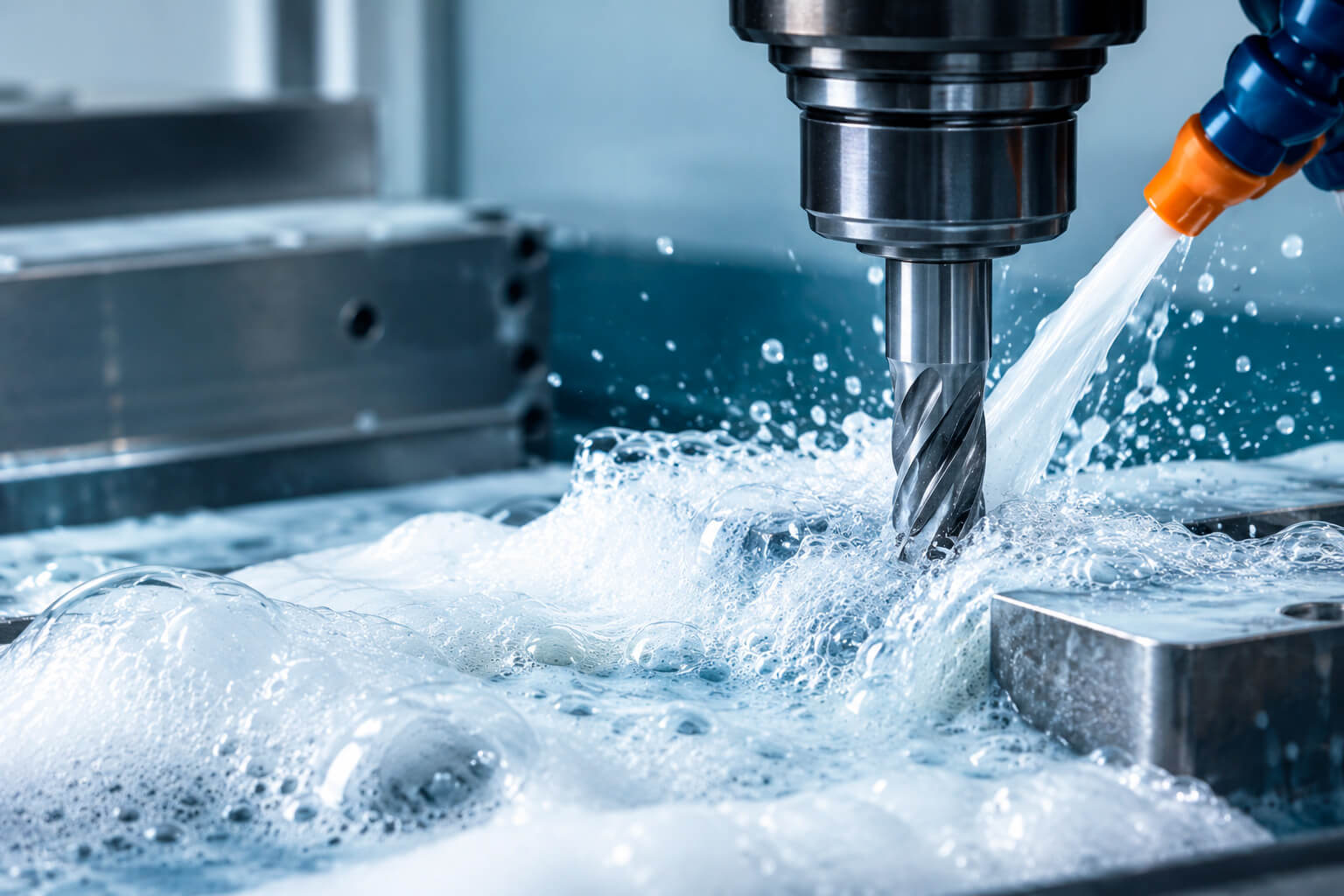
Defoamers for Metalworking Fluids (MWF)
In metalworking fluids, agitation and the return flow to the tank can generate foam. If it persists, it can hinder recirculation and cause overflows. Defoamers help limit foam formation or speed up its breakdown.
At Lumar Química, we help you select the right additive for your type of fluid, whether it is a neat cutting oil or a water-miscible fluid. For water-based formulations, we take into account the in-use dilution and the water hardness, and we recommend checking the additive’s effectiveness without compromising the stability of the fluid.