


1. What are they and how do they differ?
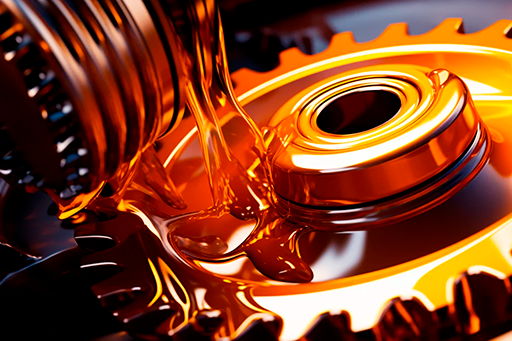
Extreme pressure additives (or EP additives) are designed to act when metal surfaces are subjected to high loads and the base oil film is not sufficient.
Unlike anti-wear additives (which form a continuous boundary film) or friction modifiers (which create a sliding monomolecular layer), EP compounds chemically react with the metal at points of extreme contact to create a solid protective layer that prevents direct metal-to-metal contact under intense pressure.
Think of them as a “defensive clot”: when pressure spikes and the oil is squeezed out, these additives activate, forming an inorganic coating—a microscopic armor—right where it is most needed.
2. Mechanism of action
EP additives are designed to protect metal surfaces subjected to very high pressures and loads, precisely where the liquid lubricant cannot form a sufficient film. Their action is based on a controlled chemical reaction with the metal, generating solid compounds with a low coefficient of friction and high mechanical strength.
- Surface adsorption
When the additive is blended into the lubricant, its molecules concentrate at the metal–metal interface. Thanks to reactive functional groups (sulfur, chlorine, phosphorus), the compound thermodynamically “anchors” itself at points of highest pressure. - Activation by temperature and pressure
Under extreme load conditions and slight local temperature increases (which occur at asperity contacts), the additive partially decomposes. This decomposition is key to releasing the active element (S, Cl, or P) exactly where it is needed. - Chemical reaction with the metal
The active element reacts with the metal surface, forming a thin layer of metal sulfide, chloride, or phosphate. These compounds are hard yet lubricious: they act as a physical barrier preventing direct metal contact. - Formation of a protective tribofilm
As the system operates, the EP film is continuously renewed:- Continuous repair: each micro-contact slightly wears the film, but the adsorbed additive reactivates the surface.
- Laminar or granular structure: depending on the chemistry, the layer can be crystalline (MoS₂) or amorphous (Fe₃P, FeCl₂), adapting to changes in pressure and speed.
Unlike AW (anti-wear) additives, which act mainly in mixed and boundary regimes through physical adsorption, EP additives require direct chemical conversion on the metal surface to form their protective film.
3. Main chemical families of EP additives
Each chemical family is selected based on load severity, operating temperature, and compatibility with the base oil and other additives.
| Chemical Family | Advantages | Sustainability | Multi-functionality | Other Aspects |
|---|---|---|---|---|
| Sulfur Compounds | Very fast activation Excellent protection under load impacts |
Moderate; contain sulfur; generate SOₓ during degradation | EP | Compatible with mineral bases May produce odors and smoke under heat |
| Phosphorus Compounds | Good wear resistance Additional lubricity |
Moderate; non-renewable phosphorus | EP + AW + Antioxidant | Less corrosive than chlorinated Very effective synergy with sulfides |
| Chlorine and Chloro-phosphates | Extreme protection under high loads | Low; corrosive and toxic residues | EP | Requires neutralizers Risk of corrosion if poorly balanced |
| Mixed S-P Compounds | Very resistant film Improved lubricity |
Moderate; contain S and P; lower doses reduce impact | EP + AW + Antioxidant | Adjust proportions according to application Avoid excessive deposits |
| “Ashless” EP Additives | Metal- and ash-free | High; metal-free; lower footprint and less residues | EP | Usually require higher dosing levels |
5. Typical applications
AW additives are selected whenever there is metal-to-metal contact under mixed or boundary regimes, where a conventional lubricant film may not be sufficient. Common applications include:
- Engine oils: Protect connecting rod and main bearings during cold starts and reduce wear in pistons and camshafts.
- Hydraulic oils: Minimize wear in piston pumps, gears, and valves in high-pressure circuits.
- Industrial gears and gearboxes: Extend the life of teeth, synchronizers, and bushings, preventing knocking and cold welding.
- High-pressure greases: Improve wear resistance in bearings, joints, and assembly fits.
- Cutting and forming fluids: Reduce abrasion and prevent welding in processes such as turning, milling, and stamping.
- Compressors and blowers: Prevent pitting and wear in pistons, rings, and bearings, maintaining volumetric efficiency.
- Turbines and generators: Ensure bearing and gear integrity under extreme thermal and mechanical conditions.
- Mobile machinery (off-road): Reinforce lubrication in construction, mining, and agricultural equipment exposed to vibration, impacts, and contamination.
- High-tonnage hydraulic presses: Ensure piston and cylinder integrity under constant compression.
Open question:
In which process do you detect signs of excessive wear, scoring, or metal “welding” in your components? This is often a sign of insufficient AW additives.
6. The LUMAR QUÍMICA proposal
Extreme pressure (EP) additives are your last line of defense when loads reach their limits. A formulation without the proper EP additives is like a cracked helmet—it will fail precisely when you need it most.
With more than 30 years of experience, at LUMAR QUÍMICA we help you design your lubricants, considering different friction modifiers and optimizing:
- EP selection based on operating temperature and load type
- Optimal dosage to balance anti-wear protection and oxidative stability
- Compatibility with your base oil and other additives (anti-corrosion, detergents, AW)
Results you will achieve
- Drastic reduction of wear under extreme conditions
- Higher load-carrying capacity without risk of welding or adhesion
All supported by:
- Clear and detailed technical documentation
- Just-in-time deliveries, so you are never left unprotected
Contact our technical team and discover how Lumar Química can make a difference in your industrial formulations.
Acerca de

Lumar Química
Distribuidores de productos químicos, especialistas en bases y aditivos.