


Antifoam Solutions for Manufacturers and Formulators of Metalworking Fluids
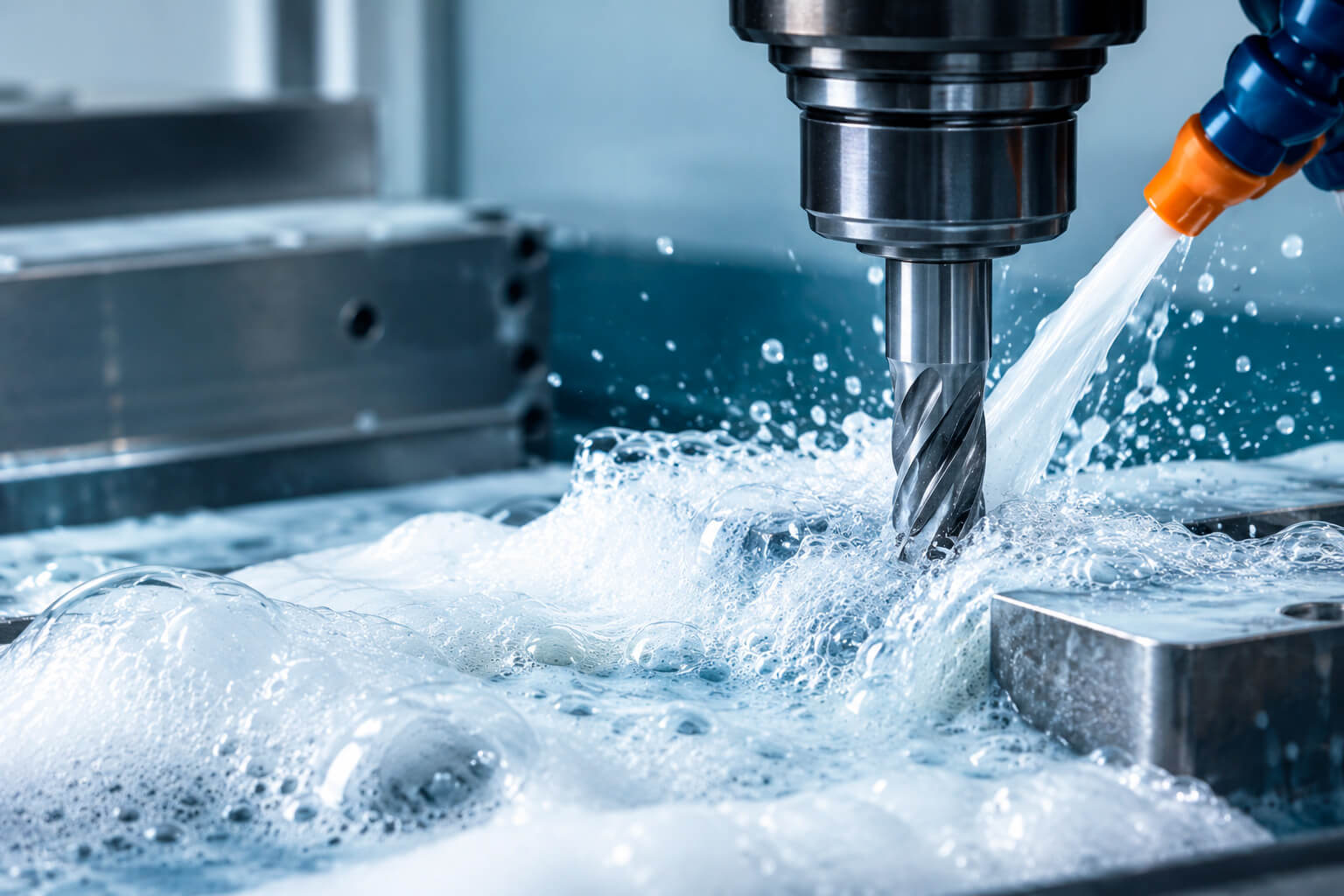
Foam can accumulate in the tank when metalworking fluids entrain air during recirculation. If it persists, it can cause overflow or interfere with filtration. Selecting the right antifoam helps control foam while maintaining the fluid’s properties and stability.
At Lumar Química, we offer antifoam solutions designed for MWF applications, taking into account the characteristics of each fluid, its composition and operating conditions. Our goal is to help manufacturers and formulators find the most suitable additive for their specific needs.
Antifoams for Metalworking Fluids and Cutting Oils
Water-dilutable metalworking fluids include emulsifiable oils, as well as semi-synthetic and synthetic fluids. In these systems, antifoam performance depends on how it disperses and interacts with surfactants and dilution water.
Neat cutting oils require additives that are compatible with the oil phase. If your issue is air trapped in the fluid, also assess air release performance in addition to surface foam control.
What to Consider When Selecting an Antifoam Agent
The effectiveness of an antifoam agent depends not only on its ability to reduce foam. It is also important that it integrates properly into the formulation and maintains consistent performance during use.
The main factors to consider include:
- Formulation type. Identify whether you are working with an emulsifiable oil, a semi-synthetic fluid, a synthetic fluid or a neat cutting oil.
- Working concentration. For metalworking fluids, compare performance at the intended operating dilutions.
- Water hardness. Use the actual plant water. Soft water may promote foaming, while hard water can affect the stability of certain emulsions.
- Chemical compatibility. Check how the additive interacts with surfactants, emulsifiers and other formulation components.
- Fluid stability. Check for phase separation, unexpected turbidity or deposits during storage and use.
- Machining conditions. Reproduce, as closely as possible, the temperature, agitation and recirculation conditions of the installation.
- Point of addition. If the additive is incorporated into the concentrate, check its storage stability and effectiveness after dilution. If added directly to the tank, assess its dispersion and how long its effect lasts.
- Process compatibility. Check filterability and residue formation. If the workpiece is subsequently painted or bonded, validate the finish and check whether the customer restricts the use of silicones.
Evaluating these parameters together helps determine which type of antifoam agent will deliver the best results for each application.
How to Test and Dose an Antifoam Agent for Metalworking Fluids
Prepare a sample of the formulation without antifoam and compare it with candidate products at different dosages within the recommended range. Keep the water, dilution and temperature constant. If foaming occurs in an operating machine, repeat the comparison using a representative sample of the working fluid.
Determine the minimum dosage required to control foam during recirculation while maintaining fluid stability. Record the maximum foam height, the time required for the foam to collapse and the amount of foam remaining after several recirculation cycles. This will allow you to assess both the speed of action and the persistence of the additive.
Antifoams for MWFs at Lumar Química
At Lumar Química, we help you select antifoam agents for metalworking fluids and cutting oils based on your formulation and operating conditions.
Tell us what type of fluid you formulate, what water is used for dilution, and whether you intend to incorporate the antifoam into the concentrate or add it directly to the tank. We will help you identify the most suitable additives to test.